Decades After a Displacement, Seneca Nation Seeks A Voice in the Future of the Kinzua Dam
Part 1 Article for SN Newsletter. Pittsburgh Post Gazette. By Stephana Ocneanu
The hulking structure on the Allegheny River upended the reservation six decades ago. The Army Corps and Seneca leaders are aiming to forge a better partnership.
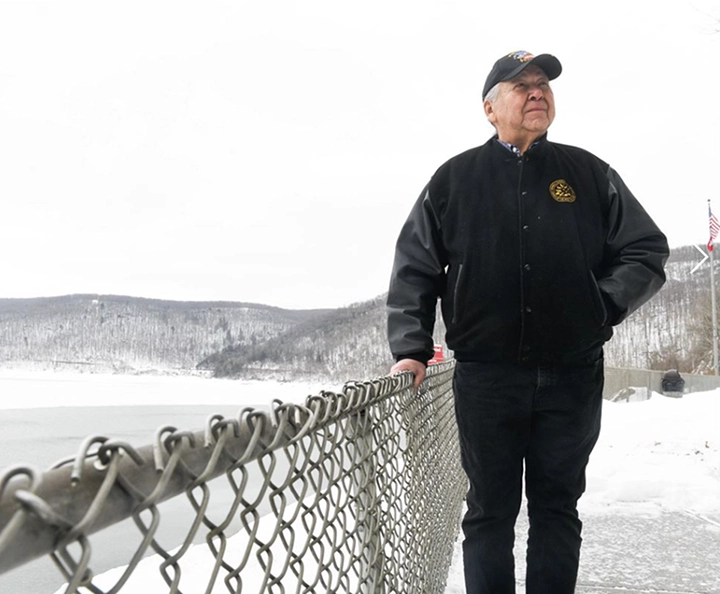
Maurice “Moe” John made a promise to his father (pictured above).
Now a councillor in Seneca Nation, he was just 12 years old, sitting on a hillside above a valley in Onoville, N.Y, in 1961.
The two watched as bulldozers dragged thick chains through their reservation near the Pennsylvania border, more than 100 miles north of Pittsburgh.
Rows of trees fell. More than a hundred homes and schools were burned down.
The land that had sustained generations of members of Seneca Nation was cleared in sweeping passes. Councillor John, now 77, said he “knew what was coming.”
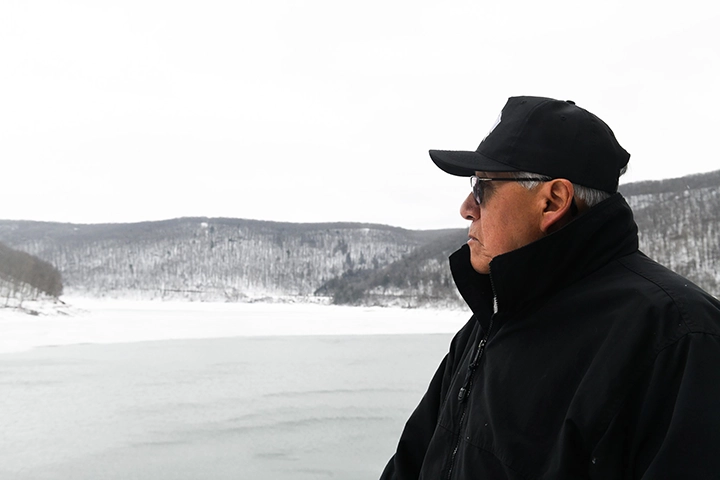
“It looked like a war zone,” he recalled to the Post-Gazette earlier this month as he looked out at the Kinzua Dam, one of the largest east of the Mississippi River, towering over the Allegheny River valley.
The Pittsburgh District of the U.S. Army Corps of Engineers wiped out riverfront communities where Seneca families had fished, hunted and farmed as it prepared to construct the dam.
Federal officials at the time said the dam would reduce the risk of major flooding along the Allegheny River basin, from up near the border all the way down to Pittsburgh, where a St. Patrick’s Day flood about 25 years earlier killed dozens of people and devastated the city.
By the time it was completed in 1965, the dam racked up a total cost of about $108 million, according to reporting done by the Pittsburgh Post-Gazette in 1978.
But Seneca Nation may have paid the highest price.
When it was completed in 1965, the Kinzu Dam cost about $108 million.
Roughly 10,000 acres of Seneca-owned land were flooded. Hundreds of graves were exhumed. Around 600 residents were forced to relocate.
“It’s something we couldn’t stop, and we all admitted that,” Councillor John said. “I promised my dad I’d never let it happen again.”
Six decades later, the Kinzua Dam, now an aging piece of critical infrastructure, is once again under federal review.
Leaders from Seneca Nation and the Army Corps of Engineers earlier this month signed a memorandum of understanding that sets the framework for meaningful collaboration and consultation between the two groups.
They referred to the document as a means of recognizing the checkered history and promising to offer Seneca leaders “a seat at the table.” The move coincides with the Army Corps of Engineers’ plan to conduct a dam safety modification study.
“This multi-year study is just beginning,” said Col. Nicholas O. Melin, commander of the Pittsburgh District of the U.S. Army Corps of Engineers. “Over the next few years, the district will not only look at the functionality of the dam, but it will look for areas of recapitalization. Where does the dam need a facelift?”
For many Seneca members, the discussion has already reopened old wounds.
“We were all promising our grandparents and our parents that we wouldn’t ever let this happen again, and now we’re sitting here next to a dam that has to be rebuilt,” Councillor John said. “That’s what I’m seeing. We’re letting it happen again.”
Broken promises
Seneca Nation President J. Conrad Seneca told the Post-Gazette that establishing a memorandum of understanding has been “a long time coming,” and that in the past, consultation between the governments was “nominal.”
When the Army Corps sought feedback in the past, it would send a letter requesting the nation’s input. But decisions were often made within days, before leaders had time to respond, Mr. Seneca said.
“The consultation that they were providing was nonexistent, and they were just doing it to check a box,” he said. “That’s unacceptable, and those things need to change.”
The MOU sets a framework of shared expectations from logistics and timelines to a structured process for resolving any disagreements.
That means establishing “clear and reliable points of contact, scheduling regular and predictable touchpoints and ensuring a transparent flow of information,” said Colonel Nicholas O. Melin, commander of the Pittsburgh District of the U.S. Army Corps of Engineers.
“Our goal is to empower both the Seneca Nation and the Corps to provide informed input, leading to better outcomes for everyone,” he said.
Mountains rise and plateau above the Allegheny River and Kinzua Dam on Wednesday, Feb. 11, 2026.
Seneca leaders told the Post-Gazette those assurances are measured against a much older promise.
In 1794, the U.S. signed the Treaty of Canandaigua with the Six Nations — which included the Seneca, Cayuga, Onondaga, Oneida, Mohawk and Tuscarora nations. The primary goals were to establish peace and friendship between the governments and acknowledge the lands reserved to the nations, according to Articles I and II of the treaty.
Article III acknowledged the boundaries of land owned by Seneca Nation and promised the U.S. would “never claim the same, nor disturb” the nation or anyone residing with them. It also stated that the land “shall remain theirs, until they choose to sell,” a transaction they can complete only to the U.S. government or under its supervision.
“That was what our people understood at the time,” said Lee Redeye, deputy counsel for the Seneca Nation. “That our land was ours forever.”
The treaty followed years of war, displacement and fraudulent land deals.
In a letter to the Seneca Nation in 1790, President George Washington wrote, “Hear well, and let it be heard by every person in your nation, that the President of the United States declares that the general government considers itself bound to protect you in all the lands secured to you.”
But by the 20th century, those promises would collide with Congress’ decision to authorize the construction of the Kinzua Dam.
Article III of the Treaty of Canandaigua with the Six Nations acknowledged the boundaries of land owned by Seneca Nation. “That our land was ours forever,” said Lee Redeye, deputy counsel for the Seneca Nation.
Broken hearts
Displacement of members of the Seneca Nation did not happen overnight.
Plans for a dam along the Allegheny River dated back decades, resurfacing after devastating floods in the 1930s and 1940s — most notably the St. Patrick’s Day Flood of 1936, when river levels reached a peak of 46 feet and caused more than 60 deaths in the Pittsburgh region.
By the 1950s, federal officials had identified the Kinzua site as a central piece of a broader flood-control system meant to protect downstream communities, including Warren, Pa., and Pittsburgh.
For years, Seneca leaders and allies fought the proposal.
They challenged it in court with several lawsuits, including one against Wilber M. Brucker, Secretary of the Army at the time.
“That case stands out, because in the opinion it says it’s undisputed that the proposed flooding for the Allegheny Reservoir Project would violate the terms of the 1794 treaty, the Treaty of Canandaigua,” Mr. Redeye said. “But their justification was that Congress could violate any treaty it wants, which to me, seems like a very self-serving decision.”
Quaker groups and other religious organizations protested in support of the Seneca Nation. Celebrities voiced opposition. Letters were written to President John F. Kennedy, urging him to halt the project.
But after years of back and forth, the Army Corps of Engineers broke ground for the construction of the dam in 1960.
Seneca land was cleared, and the nation’s hundreds of members were displaced over the next several years.
“Their justification was that Congress could violate any treaty it wants, which to me, seems like a very self-serving decision.”
—Lee Redeye, deputy counsel for the Seneca Nation
Part two to be featured in the March 27th edition