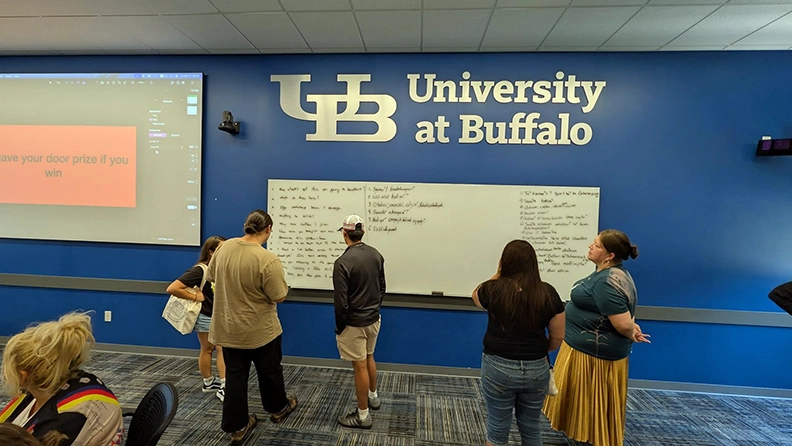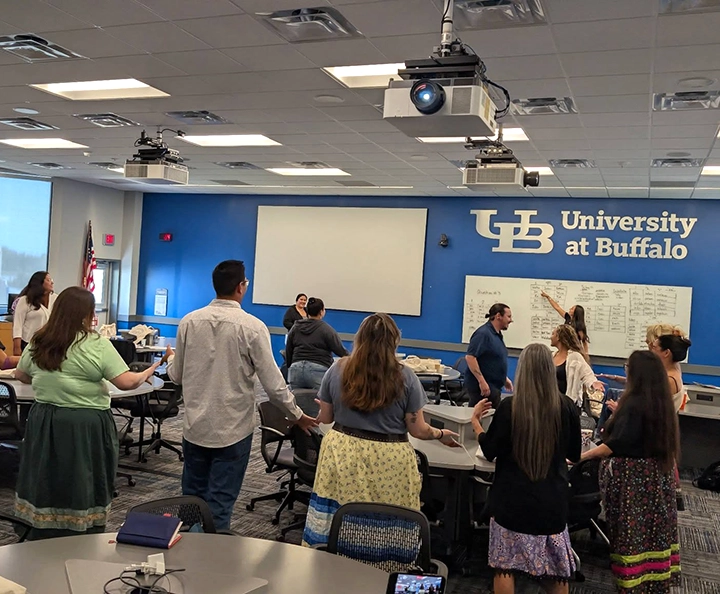
Language speakers, teachers, learners and community members gathered at the University at Buffalo Aug. 13-14 for the 4th Annual Hodinöhšo:ni:h Language Conference. The two-day event gave attendees a chance to share ideas, learn from one another and discuss the work being done to keep Hodinöhšo:ni:h languages strong for future generations.
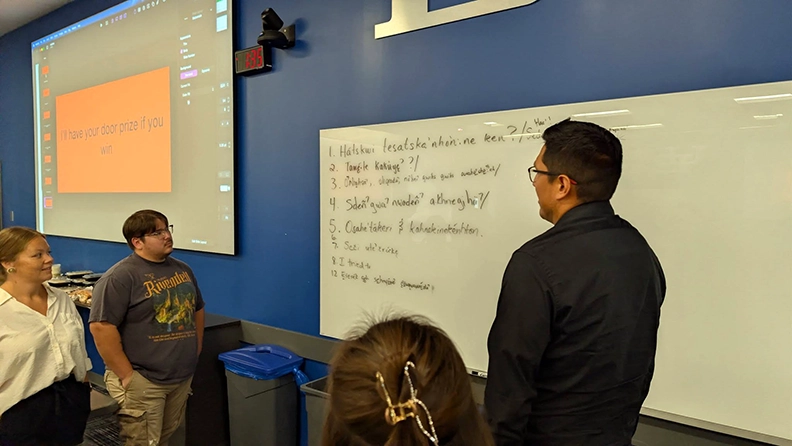
Ja:no’s Bowen, who works with Seneca Language Teacher Support and Community Outreach, presented a workshop focused on activities language teachers can use to encourage critical thinking, creativity and problem-solving while learning a language.
“Critical thinking is a useful skill to develop. It accelerates language acquisition and leads to better decision-making in all areas of life.” Bowen said.
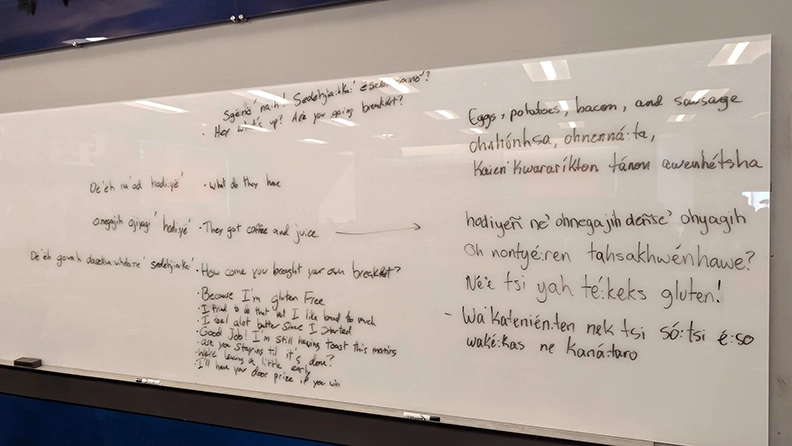
During the workshop, participants worked together in their tribes languages to create a sales pitch for selected items before developing a plan to handle an assigned problem.
For Bowen, one of the highlights was hearing each of the Hodinöhšo:ni:h languages being used conversationally throughout the workshop. “When I first started attending language conferences, many years ago, I only heard Mohawk and Cayuga language learners speak their language among themselves. Now, I can hear all of them and converse with fellow Seneca language learners!”
She said, “This workshop gave me the opportunity to hear Mohawk, Oneida, Onondaga, Cayuga, Seneca, and Tuscarora spoken conversationally. That was my favorite part.”
Mason Hoyëda’öh Jones and Aryien Joä’nö’ Stevens, with the Seneca Language Immersion Program in Cattaraugus, also presented together during the conference. Their presentation showcased several immersion style games designed for different learning styles and levels of language proficiency, beginning with activities for novice learners with no prior language experience.
The conference also gave Jones and Stevens an opportunity to attend sessions and learn from others doing language work. Stevens said Jamie Jacobs’ Seneca Bases and Usage session helped her better understand how to use Wallace Chafe’s Seneca Reconstructive Bases & Particles, while Jones learned more about the work involved in grant writing during Lynette Printup’s session.
For both, the opportunity to connect with others working toward the same goal was an important part of the conference.
Stevens highlighted visiting with like-minded individuals and networking, while Jones said a highlight was “Hearing how others are utilizing their language and doing their part to revitalize their language. Then taking their strategies and implemented them to the Seneca Language.”
From hands on games and classroom strategies to hearing the languages spoken among participants, the conference provided a space for language teachers and learners to share what is working in their communities and bring home new ideas with them. Nya:wëh to everyone involved!