
Article by Norah Stevens
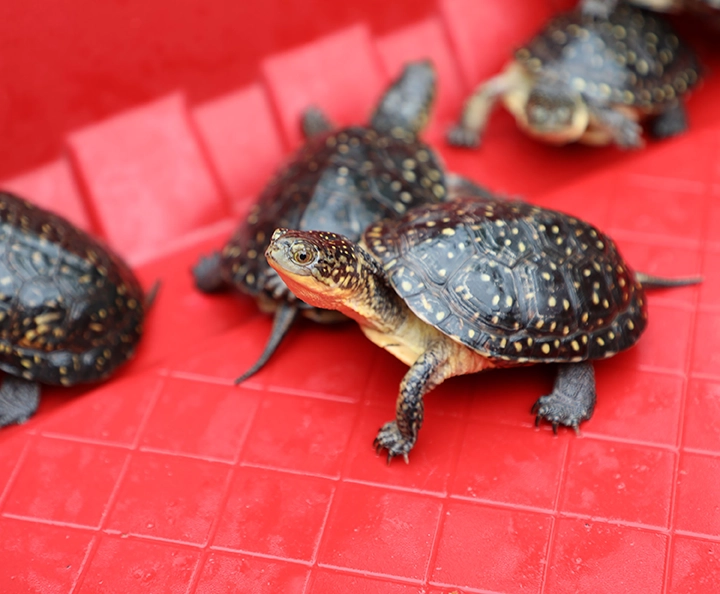
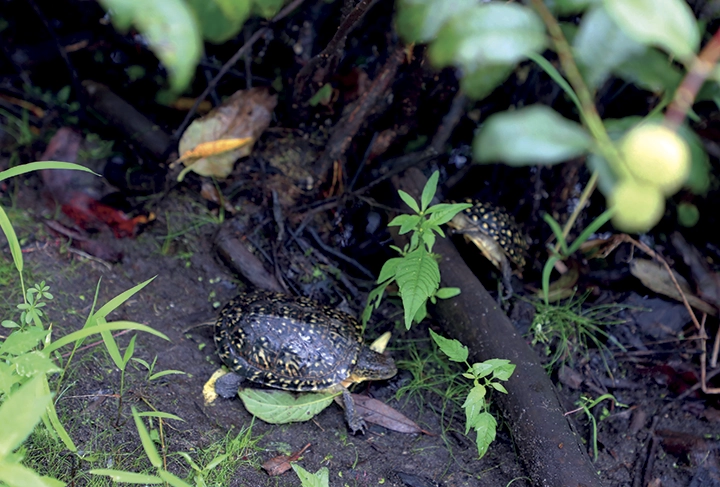
On Monday August 30, 2026 & Thursday September 3, 2026, the Cattaraugus Conservation Department released a total of 46 Blanding Turtles back into the wild. The release location was Snyder Beach area. The Blanding Turtles were originally found there and have all the means to thrive in that area. Once released, they successfully took to the buttonbush and swampy area immediately burrowing into the marshy ground to seek the beginning of their new lives.
Blading Turtles (Emydoidea Blandingii) are a medium sized turtle with an average shell length of 7-9 inches. They are semi-aquatic freshwater turtles that inhabit wetlands. A major identifying trait of the species is its bright yellow chin and throat. Blanding Turtles are currently listed on New York States Department of Environmental Conservation (NYSDEC) with a status of threatened species. Within the wetlands there is a plant that grows – especially here on the reservation call the Buttonbush (Cephalanthus occidentalis).
This project has been in the works for many years to make it come to fruition. The origin of this was around 2015. This initiative is a collaboration with the Buffalo Zoo. The Blanding Turtles Head-start program began due to the declining rate and current species threat status. This head-start program began with searching and trapping female Blanding Turtles here on the reservation. Once the females were found they would then glue a transmitter to their shell and were released back into the wild.
Then in the spring, when the female Blanding’s are ready to nest, the team would go out with a remote receiver to locate and recollect. The receiver offers a beeping sound and that increases in volume the closer you become to the tracked turtle. The turtles do need to be dug for as they burrow in the swampier areas. Once captured by the SNI Conservation Department the Buffalo Zoo was contacted and would meet the deputies on the reservation to then transport the females to the Buffalo Zoo. There the turtles would be examined and x-rayed to observe the eggs. The x-rays disclose how many eggs each female is carrying, and they will check to see how calcified each egg is. A typical clutch is around 12 eggs. The vets then administer calcium and other fluids along with oxytocin. Oxytocin is a hormone that induces the females to lay eggs. The turtles are made comfortable in a habitat that replicates one of their natural habitats and they begin to lay eggs. Once the eggs are laid the zoo employees collect them and return the turtles along with their eggs back to the reservation. The females are released back into their natural habitats – where they were found. The eggs are then placed into incubators at the office.
Once the turtles hatched, they were kept in captivity with the goal of promoting better survival rates and providing them with a better path to properly mature and reach reproductive age. In the wild, 85% of Blanding Turtles nests are destroyed by predators within the first 24 hours of the eggs being laid.
Blanding Release Video on Seneca Media & Communications Youtube:
Resources: Cattaraugus Conservation Director Greg Lay & Deputy William “Cribby” Brooks. Buffalo Zoo Facebook.