
“No More Stolen Sisters” Game Features Dancers, Information
Repost from upb.pitt.edu
The University of Pittsburgh at Bradford celebrated its inaugural season of NCAA Division III women’s lacrosse with a home game honoring the sport’s Indigenous roots on Saturday, March 28th.
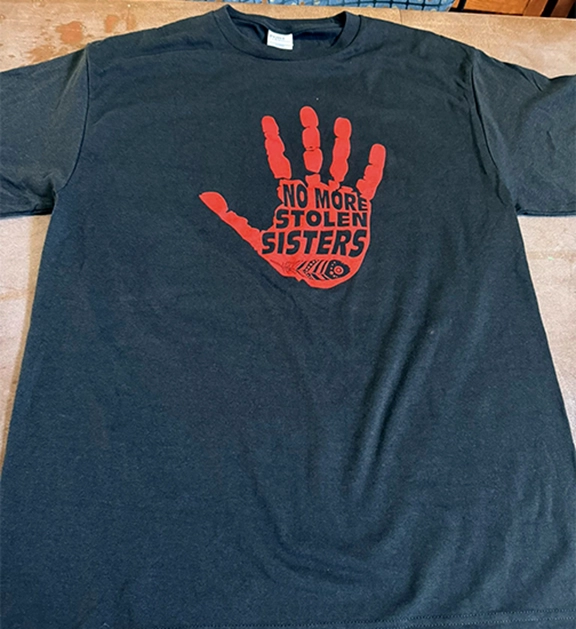
Special activities included a halftime performance by IndigiRoots dancers from the Allegany Territory of the Seneca Nation of Indians and information and T-shirt sales to raise money and awareness for missing and murdered Indigenous women. The Panthers faced off against the Alfred (N.Y.) University Saxons on Rathburn Family Field at the Kessel Athletic Complex.
Interim Head Coach Tyrone Bowen-Collateta is a member of the Seneca Nation who grew up in nearby Salamanca, N.Y. The Seneca are the largest of six Indigenous nations that formed the Haudenosaunee (previously known by the French name Iroquois) Confederacy. It was the Haudenosaunee who invented the game of lacrosse.
“My players are excited to bring light to a very important cause,” said Bowen-Collateta, who was a member of the inaugural men’s team on campus. “Indigenous women are more likely to experience domestic violence and sexual assault,” he said, explaining the game’s theme of “No More Stolen Sisters.” A 2016 study by the National Institute of Justice found that 84 percent of Indigenous women in the United States have experienced violence.
As player-coach for the men’s team, Bowen-Collateta (pictured below) taught his fellow players about their sport’s roots, and now as coach of the first-year women’s team, he is doing the same. Dignitaries of the Seneca Nation have been invited to the game as special guests.
To further spread awareness of missing and murdered indigenous women (which are sometimes referred to with the acronym MMIW), the team is co-sponsored a screening of the PBS documentary “Bring Her Home” at Pitt-Bradford.
At both the screening and the game, Pitt-Bradford athletics sold T-shirts to benefit organizations working with missing and murdered indigenous women.
The women’s program roots go back to last spring, when the team competed as a club sport under then-head coach Vic Goeller.