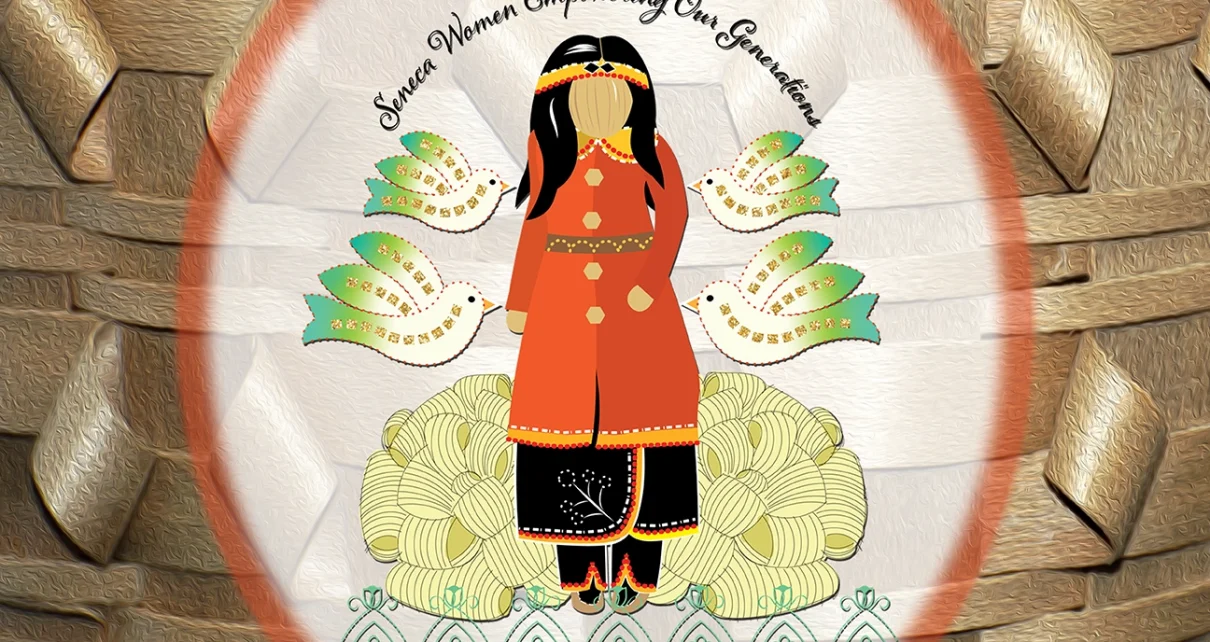
Seneca women are fierce. We are fierce protectors, leaders and defenders. A society based on matrilineal lineage; Seneca mothers were the foundation of communal villages and generational longhouses for centuries. We are keepers of our clans, hold the right to name leaders, cultivators and land bearers with the power to influence political and diplomatic endeavors. As agricultural experts, women influenced economy and trade from vast acres of corn and yields from bountiful harvests. Labor was also a social engagement with women gathering to work, laugh and enjoy each other. Our natural way of life fashioned us to be tough but loving. Our women continue to lead us and the next seven generations with the same dignity, pride and love.
The Seneca Nation declared May Seneca Women Acknowledgement and Recognition Month in 2014 at the regular session of council motioned by Christina Jimerson, seconded by Nikki Seneca. “Gegwidekneh is the season we give thanks to our thunderers, maple trees, seeds and planting. It is the month we celebrate Mother’s Day, a time we honor all symbols of Mothers is in May. Seneca women display kindness, strength, unity, and fierceness, they are the backbone of the Seneca people,” Council motion, 2014.
Seven Seneca women leaders past, present, and future will be featured for the month of May. These influential women are leading their own paths while staying connected to their roots, community, and traditions. Ja:göh!
PAST – Seneca Language & Culture
Geraldine Gawö:Sid-Tah Green was a member of the Seneca Nation and of the Turtle Clan. Often being referred to as “Sid-tah”. She resided on the Cattaraugus Indian Reservation in Newtown (Lawtons, New York). Born August 1, 1929, in Buffalo to her birth parents Lyman and Laura George then adopted and raised by Sherman and Sophia Cook. She kept in touch with her birthparents but placed emphasis and devotion on the relationship with her adopted parents. Sid-tah later went on to marry Worthington Green. They did not have any children, but she would often consider nieces and nephews to be her children.
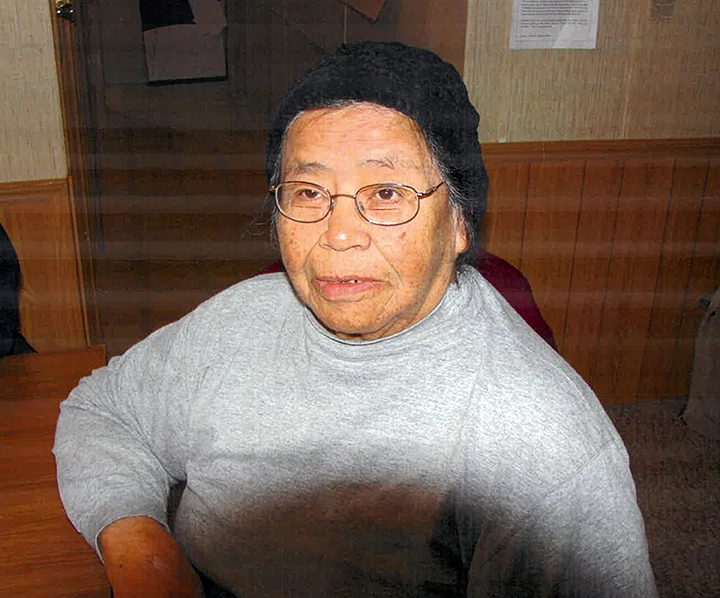
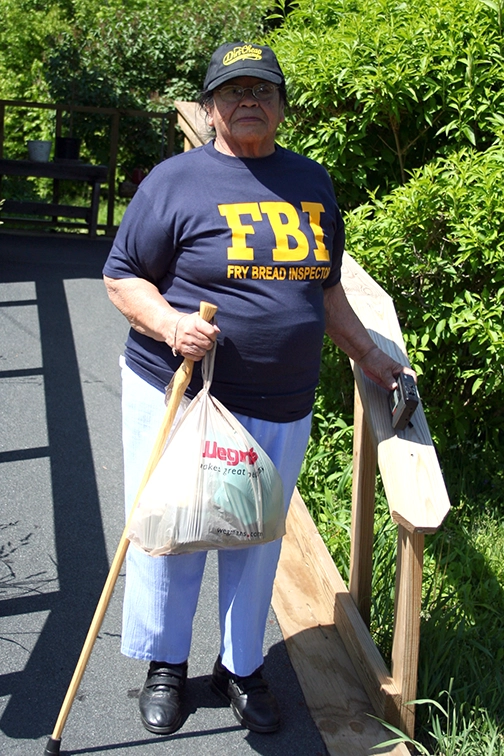
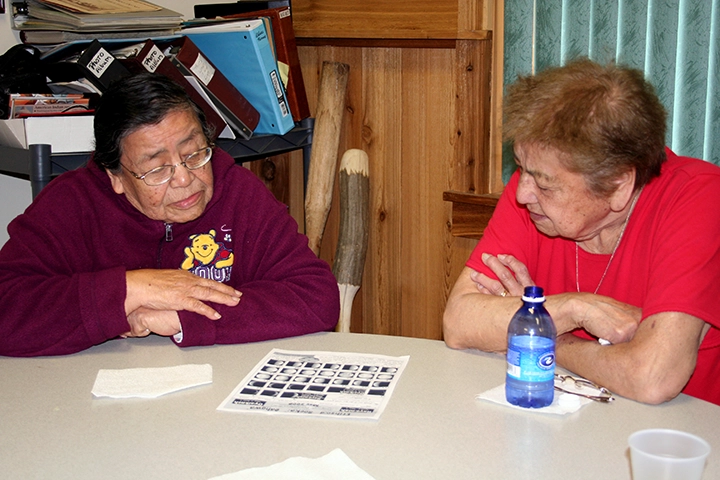
Although familiar with and an active member in the Longhouse throughout her lifetime, her marriage to Worthington resulted in a leadership role within the community. Through her husband she gained knowledge of traditional history, speeches, and ceremonial duties. The duo met with elders across the Haudenosaunee nations while attending meetings, along with ceremonies. The couple was well known and respected.
After the loss of Worthington, Sid-tah begun stepping into a role of teacher and mentor. She was a revered fluent speaker of the Seneca Language and would often share her knowledge with anyone who showed interest. She was a Faithkeeper at the Newtown Longhouse. She dedicated time to speak at events in Canada and across the US. She was proud of a specific event of when she was personally invited by First Lady, at the time, Hilary Clinton to discuss the leadership role held by women in native cultures along with issues of importance to the Seneca Nation, to women, and to all people. She often opened her home to anyone who wanted to acquire knowledge of our language and traditions and worked tirelessly to promote and learn all about our people, and language to prevent the loss of our ways.
On November 5, 2009, Geraldine passed away at her home surrounded by loved ones. The loss was heavily felt across the confederacy. A Leader, a Mentor, a Resource, a Loved One, an Auntie to many was lost that day. In 2017, The Trailblazing Women of WNY Monument Projected was commenced by the Erie County Commission on the Status of Women and the University at Buffalo Gender Institute. This project was to rectify the underrepresentation of women in public spaces. In 2024 the unveiling of three pioneering women who significantly contributed to the region’s development, Geraldine Gawö:Sid-Tah Green being one of the three.
PRESENT – Seneca Language & Culture
Derise Waterman – Whitcomb is member of the Turtle Clan, she is originally from Cattaraugus but has resided in Allegany for many years with her husband, Keion, and family. They have one child but are expecting a new addition to their family very soon.
Derise’s ambitions are rooted in the Seneca Language. She career is dedicated to learning and teaching our language. As a Seneca Language Immersion student, she first graduated the intense program and then became a teacher for the incoming class.
Patience and teaching seem to be intuitive for Derise, her calm approach and empathy towards new learners boosts confidence and focus in her students. Her hands on repetitive methods make the learner comfortable. The colorful visual aids concerning weather, time, seasons, and daily routines along the walls of the office are key for memory recognition and establishing routine and patterns.
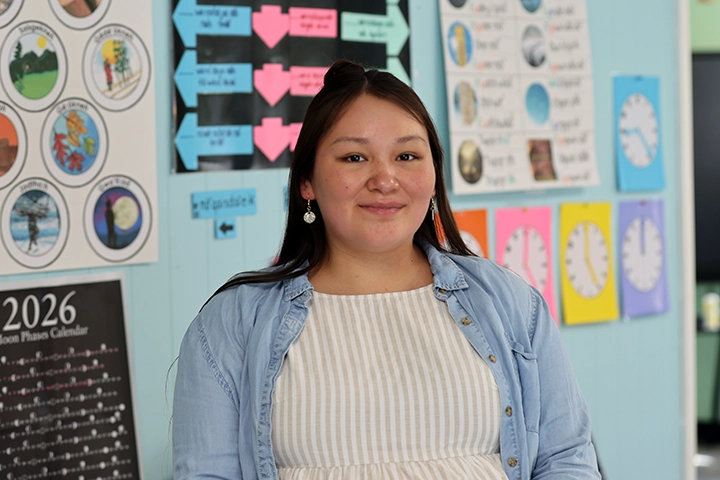
After graduating from the Seneca Language Immersion Program, Derise’s passion for teaching extended to St. Bonaventure. As an adjunct professor, she teaches Seneca Language college level courses for basic and advanced learning. Working for the Seneca Language Department, she hosted Seneca language and culture youth camps for school aged children during breaks.
Derise has settled at the Women’s Ceremonial Program as the Supervisor. She continues to teach the apprentices. She aides the master elder teachers in spelling, reading and writing the Seneca Language. Her experience is broad, she can fill gaps between ceremonial language and daily language. She contacts coveted resources when she doesn’t have the answer and is determined to find it.
As a modern Seneca woman juggling work, family, a side business and life, Derise feel most connected to Seneca culture and traditions by attending ceremonies. “Giving thanks is something we’ve done perpetually, it’s something we still do today that still connects us,” shares Derise. Continuing to learn the Seneca Language also keeps Derise connected our culture and elders. Younger people conversing with elders has been a goal she has seen come to life in her years working at Immersion, Seneca Language and Women’s Ceremonial.
“I have been told that all of us have our own duty on this earth. A long time ago, everyone had to help out for us to survive. Planting, making clay pots, cooking, or hunting are duties we are gifted with when we are born. It can take a while to find them but if we try to walk a good path, we will find it and help our community. I encourage everyone to keep learning, whether it’s our ceremonies, language, crafts, or agriculture,” shared Derise.
FUTURE – Art & Fashion
Ruth Anne Keyes is a member of the Bear clan. Daughter of Michele and Rod Keyes, granddaughter of maternal grandparents – Ruth and Dan John, paternal grandparents Annie and Robert “Boots” Keyes. She was born in Buffalo, NY and raised on the Cattaraugus Indian Reservation.
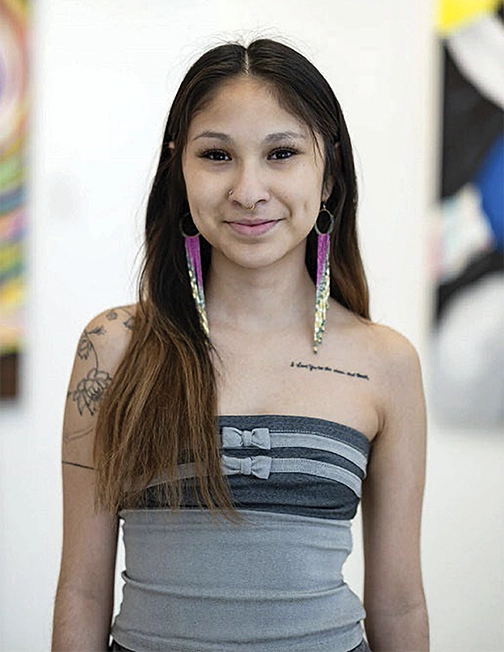
Ruth Anne is currently residing in Chicago for school. Engaging a career as a mixed media artist and community organizer all while pursuing a Bachelor of Fine Arts degree at the School of the Art Institute of Chicago (SAIC). She is anticipated to graduate in the spring of 2027. While at school, Keyes has re-established the Indigenous Student Association in her first year at SAIC, creating space for Native and Indigenous Students within the Institute and Chicagoland Area. Spanning over three years at the school she has also curated, organized, and facilitated a plethora of community events including an Indigenous Student Group Mixer, a Native American Heritage Month Film Screening, Studio Visits with different artists, and informational tabling’s.
Along with organizing events, she is also known for her jewelry, photography, and non-traditional mixed media work that explores the intersectionality of femineity and indigeneity. Ruth draws inspiration from her surroundings, childhood and working multiple women’s meetings as a waitress at Busy Beaver’s – a restaurant at the time located in Wolf’s Run which heavily influenced her community work. Her goal as an artist is to represent what community, culture, and identity is like through different art mediums as well as bringing people together as a form of intergenerational joy and resistance.