ALLEGANY TERRITORY, by Alyssa Coustenis— Beneath the surface of the Ohi:yo’, freshwater mussels play an important role in maintaining the health of the river. Often called the ‘livers of the river,’ they clean the water and serve as indicators of environmental health.
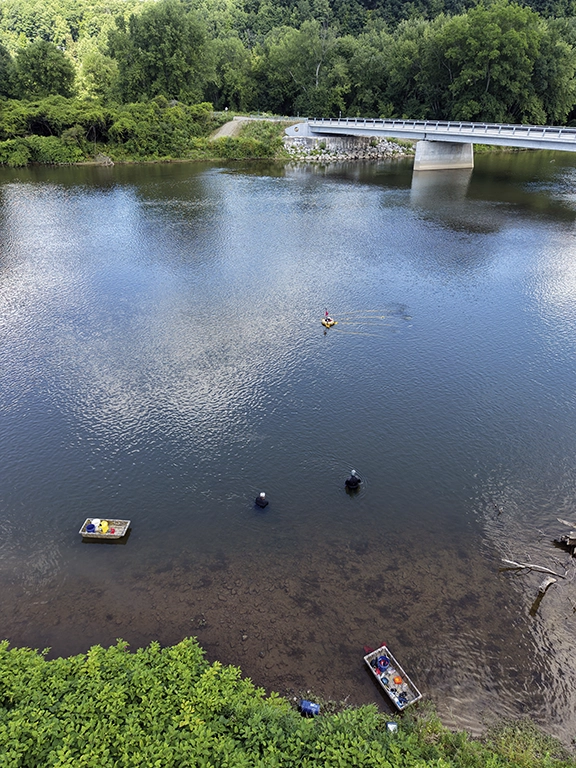
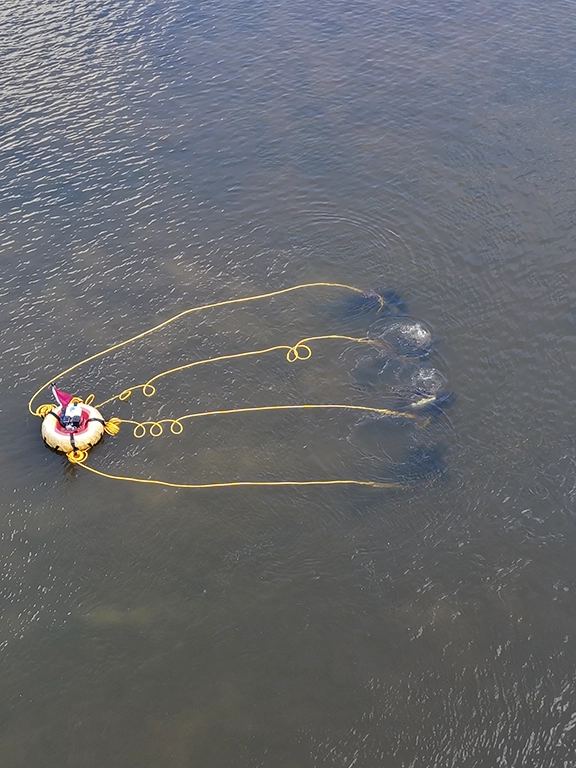
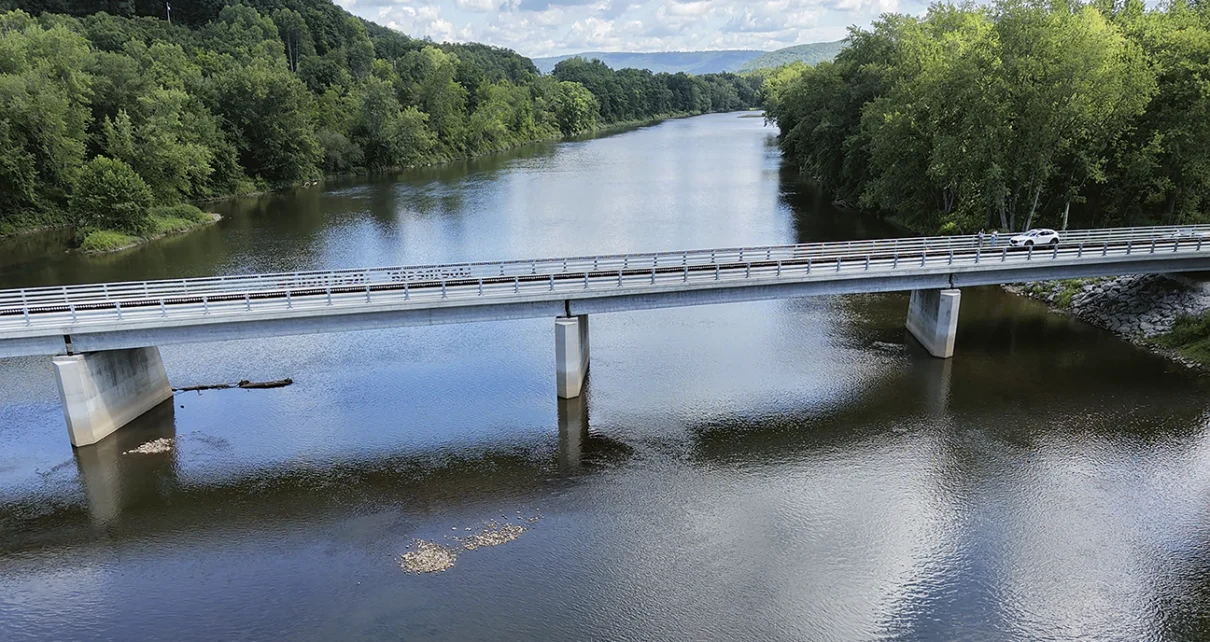
This summer, the Seneca Nation Fish & Wildlife Department partnered with Normandeau Associates, Inc. to conduct a follow up survey of endangered freshwater mussels near the Red House Bridge, where populations had previously been relocated ahead of bridge construction. Normandeau Associates is an environmental consulting firm specializing in ecological research, including freshwater mussel surveys and endangered species relocation.
Before construction began, researchers discovered a large, healthy population of endangered mussels beneath the bridge. SNI Fish & Wildlife identified three federally protected species on the territory: the Northern Riffleshell, Clubshell, and Rayed Bean. The Wavy-Rayed Lampmussel is also protected at the New York State level.
To protect the vulnerable mussels from construction related disturbances, they were collected and relocated upriver to a designated site. Researchers returned this summer to determine whether the mussels were surviving and how construction had affected their habitat.
The results were encouraging. Mussels were discovered at the relocation site, along the river leading back toward the bridge, and beneath the bridge itself. Researchers also found juvenile mussels, a great sign that the population is continuing to reproduce. “We’re seeing that mussels are moving right back in,” SNI Conservation, Fish & Wildlife’s Andrew Howard explained.
The findings are especially significant considering the challenges these species face elsewhere. According to the U.S. Fish & Wildlife Service, many federally endangered mussels have experienced major population declines due to pollution, habitat loss, and other environmental threats.
When asked what makes this stretch of river suitable for endangered mussels, Howard said the conditions here on territory align perfectly to support them. Water temperature, depth, quality, and the riverbed itself all contribute to creating an ideal habitat.
The presence of multiple thriving populations of endangered species here on Allegany Territory, is proof of an optimal environment. The relationship between the mussels and the Ohi:yo’ works both ways. Clean water and healthy habitats allow these mussels to survive, while the mussels help maintain those conditions.
The Red House Bridge Mussel survey shows how conservation efforts can protect endangered species while allowing necessary infrastructure projects to move forward. By relocating the mussels before construction and monitoring them afterward, researchers documented
The findings also highlight the importance of preserving environments that allow these species to flourish at rates that outperform other regions. While the mussels may be among the smallest inhabitants of the Ohi:yo’, their role within the ecosystem is irreplaceable.
Their presence helps sustain the river’s natural processes, and their protected status can contribute to a wider range of efforts to protect the Allegheny River from environmental threats, challenging activities that could harm the Ohi:yo’ in the future. Continuing a lasting cycle of protection for the waterway and everything that depends on it.