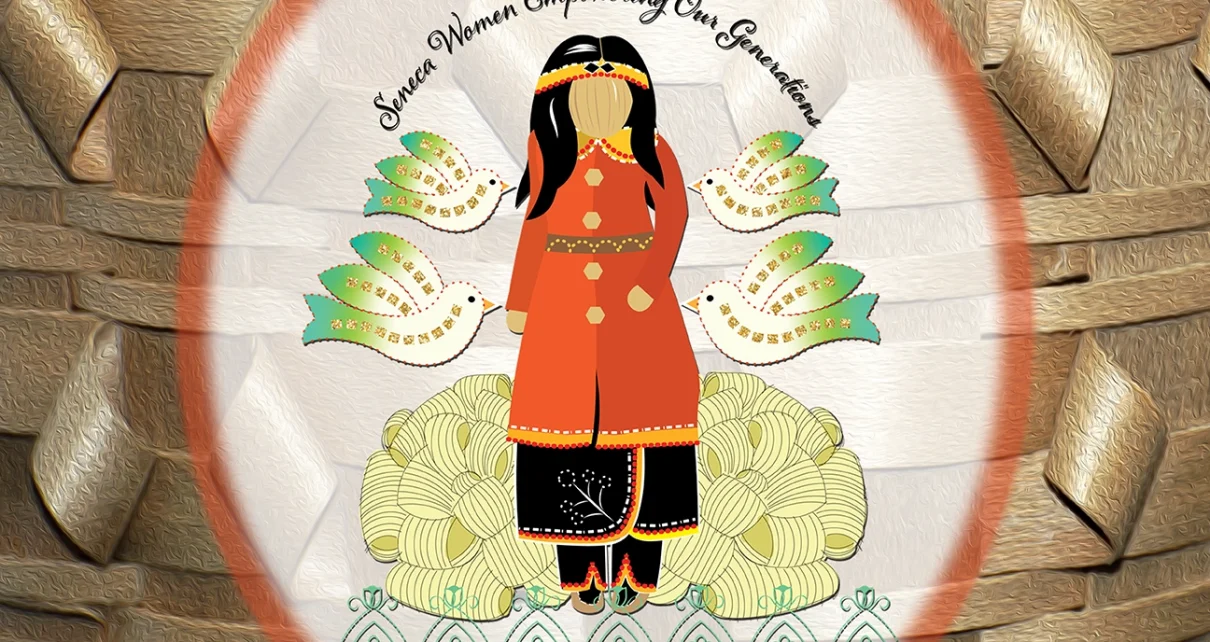
Seneca women are fierce. We are fierce protectors, leaders and defenders. A society based on matrilineal lineage; Seneca mothers were the foundation of communal villages and generational longhouses for centuries. We are keepers of our clans, hold the right to name leaders, cultivators and land bearers with the power to influence political and diplomatic endeavors. As agricultural experts, women influenced economy and trade from vast acres of corn and yields from bountiful harvests. Labor was also a social engagement with women gathering to work, laugh and enjoy each other. Our natural way of life fashioned us to be tough but loving. Our women continue to lead us and the next seven generations with the same dignity, pride and love.
The Seneca Nation declared May Seneca Women Acknowledgement and Recognition Month in 2014 at the regular session of council motioned by Christina Jimerson, seconded by Nikki Seneca. “Gegwidekneh is the season we give thanks to our thunderers, maple trees, seeds and planting. It is the month we celebrate Mother’s Day, a time we honor all symbols of Mothers is in May. Seneca women display kindness, strength, unity, and fierceness, they are the backbone of the Seneca people,” Council motion, 2014.
Seven Seneca women leaders past, present, and future will be featured for the month of May. These influential women are leading their own paths while staying connected to their roots, community, and traditions. Ja:göh!
PAST – Seneca Language & Culture
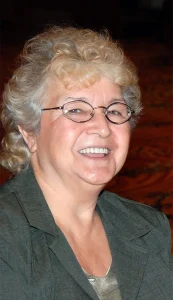
The late Phyllis Bardeau was a member of the deer clan and was born in Coldspring, NY to the late Dorothy Jimerson John. A fluent speaker of the Seneca language, Ms. Bardeau worked in Seneca language programs for 35 years teaching all levels from primary to adults. Her work was based on Seneca language, curriculum, and materials development. Ms. Bardeau was an instructor at State University of New York at Buffalo for many years. She developed a 4-semester syllabus to fulfill the university’s language requirement. She earned her master’s degree in 1994 and submitted her thesis, “Voice of the Seneca”. This work has served as the basis for the “Fundamentals of Seneca” instructional book which is currently being used.
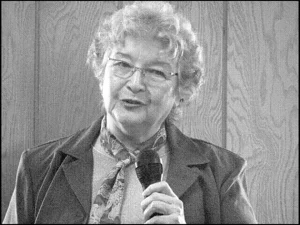
In addition to writing several successful language grant proposals, Phyllis authored – the 300 Seneca word “New Reference Edition,” her most extensive project. This publication required 6 years of research both professionally and personally. Ms. Bardeau managed Seneca language programs in both the Allegany and Cattaraugus Seneca communities, as well as urban Buffalo.
Phyllis dedicated her professional career to Seneca language research and teacher training.
PAST – Education
Cynthia J. Mohr was a respected educator, mentor, and community member from Salamanca, New York, and a proud member of the Seneca Nation Heron Clan. She was born on June 6, 1955, to Frank and Norma Kennedy. Raised in a family deeply tied to the community, Cindy grew into someone whose life was marked by patience, kindness, and a natural ability to make people feel noticed, safe, and special.

Cindy graduated from Kenmore West High School and attended Buffalo State University, where she earned her bachelor’s degree. Then to St. Bonaventure University for her master’s degree in education. She was the first Native American teacher in New York State to hold a dual certification in Elementary and Special Education.
In 1978, Cindy began her career at Prospect Elementary in Salamanca as a Special Education Teacher. She retired in 2014 after teaching 2nd grade for 32 years. Her work in the classroom went far beyond lesson plans and routines. She brought patience, gentleness, and a kind of care into the classroom that students could feel. Cindy’s encouragement stayed with students because she helped them build confidence in themselves. She pushed them to think for themselves, trust their own ideas, and believe they had something important to offer.
Cindy was loved at Prospect because of how she showed up for people every day. She brought that same care to her students, coworkers, family, and friends. It never took effort and was a part of who she was. Michala Redeye, a longtime friend and coworker of Cindy said, “I learned so much from her about being kind, loving, understanding, patient, a woman, a mother, a teacher, and friend.”
In June of 2020, Cindy passed away following complications from COVID-19. During that same heartbreaking time, her mother, Norma Kennedy, and her sister, Diane Kennedy, also passed away. Their losses are still felt deeply across the entire community.
In 2021 the Cynthia Mohr Memorial 5K Run/Walk was created in her memory. The money raised goes toward the Cynthia Mohr Scholarship Fund, helping students continue their education while carrying forward her love for learning. In 2022, the Cindy Mohr Memorial Library was dedicated in her honor at Prospect Elementary as a tribute to her legacy she left.
Cindy believed that “every child deserves someone who will never give up on them, someone who understands the power of connection and someone who insists that they can be the best that they can be.”
The 6th Annual Cindy Mohr Memorial 5K Run/Walk is scheduled to take place Saturday, June 6 at Veteran’s Park in Salamanca. Registration begins at 9:00 am and run begins at 10:00 am.
PRESENT – Art
Randee Spruce is using art and museum work to help change the way Seneca and Haudenosaunee stories are represented in museums. She is a multidisciplinary artist and independent curator from the Allegany Territory. Randee is Heron Clan.
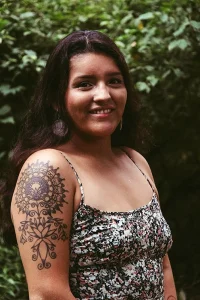
Randee studied museum studies and studio arts at the Institute of American Indian Arts in Santa Fe, New Mexico, a background that continues to shape both her curatorial work and artistic practice.
Spruce said her work in museums first began through curatorial work, where she became involved with collections management, conservation and collaborating with universities and museum professionals.
That experience eventually led her to larger projects, including an exhibition with the Corning Museum of Glass. She said the project was important because it marked the museum’s first time documenting Native American art within that international space.
She also worked with the Rockwell Museum, a Smithsonian affiliate, to help re-imagine its Haudenosaunee exhibit. For Spruce, the work is about more than displaying objects. It is about making sure the stories connected to them are represented accurately and respectfully. She said museum exhibits can sometimes make Native people appear as if they only belong to the past. Through her work, she wants people to understand that Seneca and Haudenosaunee communities are still here, still creating and still shaping their own narratives.
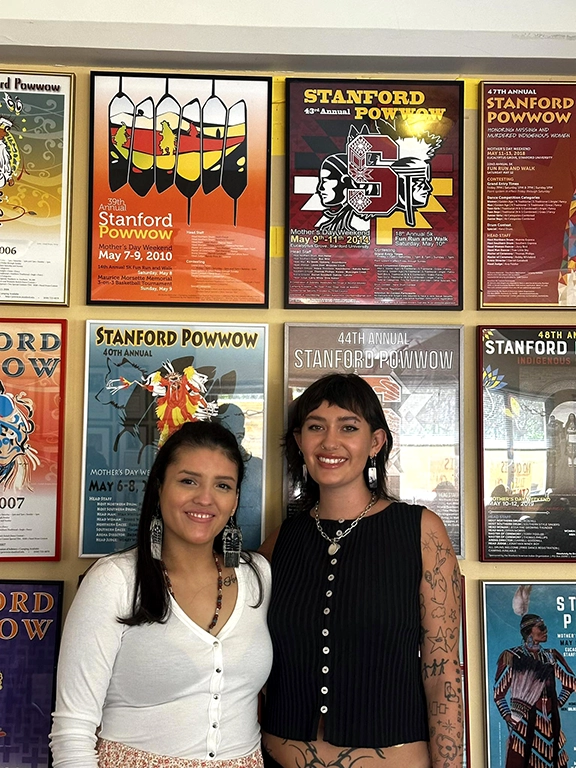
for the collaborative project they did
Spruce said being a Seneca woman means being part of a community and doing work that gives back to that community. She sees her artwork as one way to do that. Her pieces encourage curiosity about culture, ceremonies, language and even topics like mental health. Much of her inspiration comes from ancestral objects, historic beadwork and pottery designs that she studies through museum collections and carries into her own work.
Along with curating, Spruce continues focusing on her own artwork. She recently received a 2026 fellowship through the Arts Council of the Southern Finger Lakes for a project centered on substance abuse and alcoholism. She said those subjects are not always openly discussed, but they are real issues affecting Native communities and deserve attention.
She was also recently invited to the Carnegie International in Pittsburgh, where she was commissioned to create a flat purse using traditional Seneca beadwork techniques. Spruce said reviving older beadwork styles has become a major focus of hers. After first learning beadwork in high school, she returned to it more seriously around 2021 after studying historic pieces in museum collections and searching for antique beads and materials that are now difficult to find.
Beyond museums and galleries, Spruce said she hopes to continue being a positive example for younger Seneca women. She encourages them to follow their interests, trust their abilities and not be afraid to step into spaces that may feel intimidating. Through her art, curating and advocacy, Spruce is helping show younger generations that they belong in those spaces and can help shape them too.
FUTURE – Education
Olivia “Gawehnidi” Porter is a member of the Turtle Clan from the Seneca Allegany Territory. Her parents are Odie and Rob Porter. Olivia’s maternal grandparents are Carolyn Brant (Watt) and the late Randy Brant and my paternal grandmother is the late Lana Redeye.
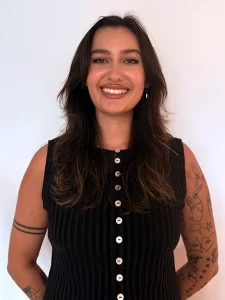
She is currently studying for her master’s degree in philosophy at Stanford University and will be graduating this June. In the fall, Olivia will be starting a PhD at Brown University in Political Science with a focus on political theory. She has also secured the 2026-27 American Political Science Association Diversity Fellow. In addition to being a student, Olivia is a library assistant at the Stanford Philosophy Library, a Graduate Wellness and Engagement Coordinator at the Stanford Native American Cultural Center (NACC), and the former Vice President of the Stanford Native American Graduate Students (SNAGS).
As a staff member at the Stanford NACC, she engages with the Stanford Native community by organizing wellness and social events for the grad students. Olivia also collaborated with other centers on campus to bring Seneca artist, Randee Spruce, to give a presentation on Seneca beadwork at the NACC in March. This quarter she’s been organizing a biweekly showcase for Native graduate students to present their theses and projects they have been working on this school year.
She stays connected to her Seneca roots by going home for all breaks from school. Olivia has spent most of my summers at home since I started college and attempts to go to Longhouse for Strawberry Dance and Green Corn as her schedule allows. She also stays connected by doing beadwork in her free time at school.
Olivia feels most connected to home when I’m able to facetime with my grandma. Even if we can only talk for a few minutes, seeing her smiling face always makes me feel better when I’m feeling homesick. She also facetimes with her mom every single day because she’s her best friend and loves her dearly. Being so far from home has been difficult, but the Native friends that she’s made at Stanford who are from their own territories have become like her family away from home.
Olivia’s personal goal is to keep learning for the rest of her life, which is why she will pursue her PhD to become a professor. She also wants to learn more Seneca language starting with Ganö:nyök and continue learning Seneca basket making from her Aunt Nancy Toth. Her community goals include being involved with youth education. Olivia’s Indian Country goal is to connect the study of Native governments and tribal sovereignty with the field of political science.