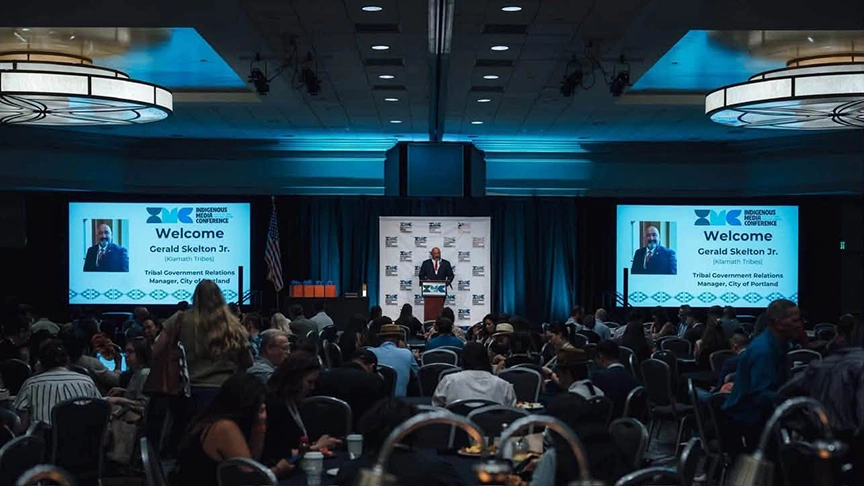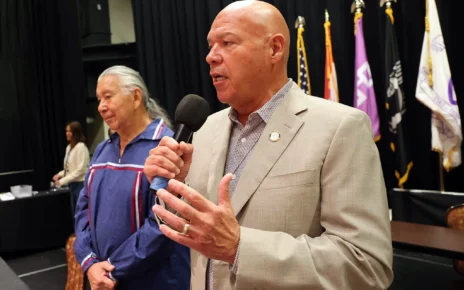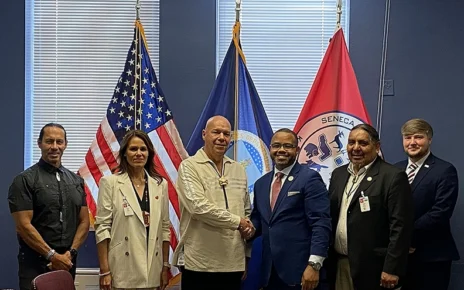
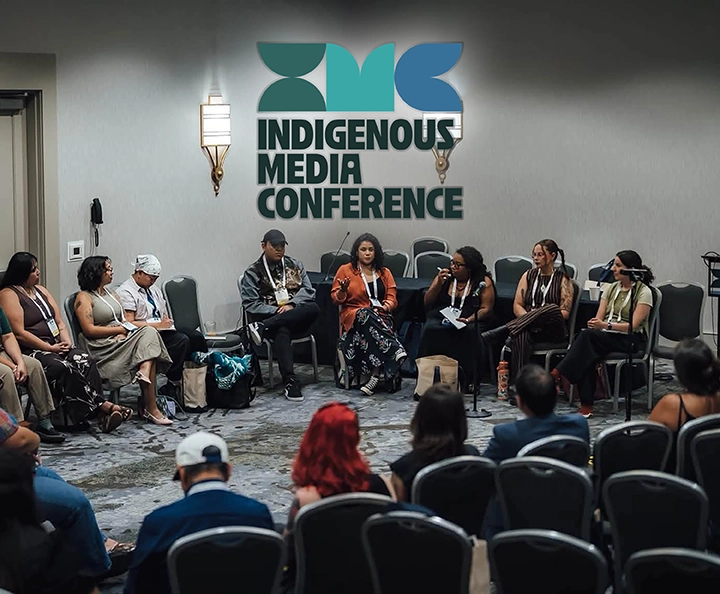
The Seneca Nation Newsletter staff attended the Indigenous Media Conference in Portland, Oregon for the first time!
We learned, connected, and are revived to continue our dedication to our community. We received encouragement, insight and love from Indigenous journalists from all over Turtle Island. We got to see cultural performances at the opening ceremonies.
Staff attended the Al Reporting Tools for Journalists presented by Mike Reilley, a senior lecturer at the University of Illinois. Reilley shared a plethora of free Al resources to aid journalists in research, interview questions, and copy editing. Many have used these tools, many are skeptical. Indigenous communities are stewards of their land and reject data centers near or on their territories and maintain their sovereign rights. Reilley pushed that Al tools are aides and are not to be used exclusively. Fundamentals, experience, and human interaction are key for anyone working with Al.
Reporters learned safety tools for the field and how to cover protests safely. Discussions included what to do if you are arrested, questioned by police, or caught in extreme weather. Guides and information on how to keep your phone and equipment charged, how to stay in contact with peers and family, and how to move around in crowds without getting trapped are important when in the field.
Seminars on the MMIP and the LGTBQ+ 2 spirit provided valuable insight, education and cultural sensitivity when interviewing, writing and discussing our vulnerable relatives and families. Approaching families and victims, how to connect, and gain trust can be tricky in tight nit communities, but care, respect, and support go a long way in Indigenous relatives. Many writers touched on frustration from editors to report on the MMIP crisis and LGBTQ+ victims.
The Healthy Native Youth organization presented a website full of resources for mental, emotional and physical health care including Bounce Back for Classrooms: A Social Emotional Learning Curriculum for 2nd-5th Grade Elementary Students, is a curriculum that supports students in better understanding the normal effects of stress and trauma and helps them build skills and healthy coping strategies that promote healing and resilience.
The First Nations Youth Suicide Prevention Curriculum is experiential and includes detailed guidelines for teachers as well as all required materials for in-class activities such as group discussions, quizzes, games, and other projects that provide opportunities for each youth participant to journal their journey of resilience and well-being.
Positive Indian Parenting (PIP) is an eight-week curriculum, developed by the National Indian Child Welfare Association (NICWA), which provides practical and culturally specific training for American Indian and Alaska Native (Al/AN) parents.
Many of these training courses are free, contact information can be found at healthynativeyouth.npaihb.org under the curricula tab.
The Healthy Native Youth organization will be at the National Indian Education Association Convention and Trade show in Buffalo, NY from October 7-10, 2026. We look forward to reconnecting with this organization and sharing more resources to promote healthy Indigenous youth.
Shannon Shaw Duty won the Milestone Achievement Award and Minnie Two Shoes, the Tribal Media Award. She is the editor of the Osage News and has served on local and national boards during her career. She leads community centered initiatives and has co-authored books including “The Making of Killers of the Flower Moon.” She gave a passionate speech at the opening ceremony about why journalism is invaluable to our Indigenous rural communities, because we are the only ones telling our stories, documenting our own history, and speaking for ourselves.