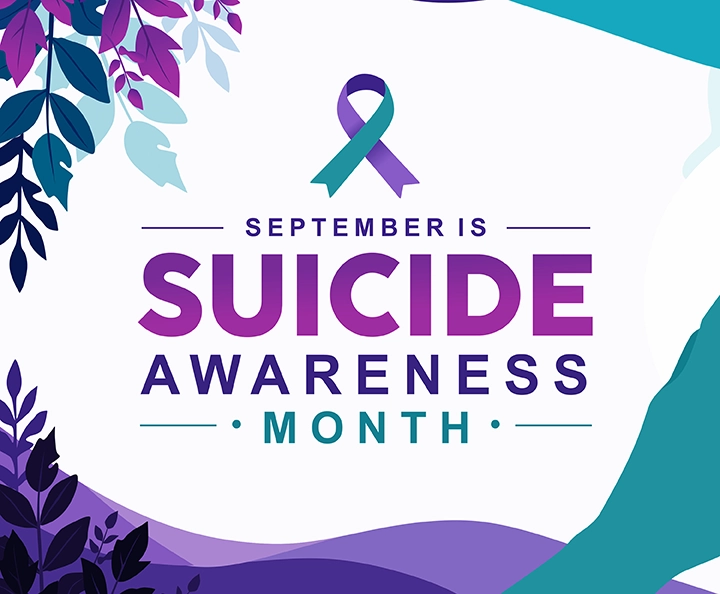
September is National Suicide Prevention Awareness Month.
Every September national organizations bring awareness to Suicide Prevention. This is the time to raise awareness, spread hope, connect with communities and to support survivors and ones who have been affected by suicide. September 10th is World Suicide Prevention Day.
Suicide Prevention: Recognizing and Helping
Suicide Prevention begins with something simple, connection. When someone is struggling emotionally, feeling overwhelmed or going through a crisis, knowing there is someone who cares and supports can make a difference. Suicide is 100% preventable; there is always help available.
Some people are at more risk for suicide than others, so recognizing when someone could be struggling and supporting them is key to prevention.
There are many possible risk factors that could play a role in someone thinking about suicide including health, environmental and historical factors.
- Health Factors: Mental health conditions such as depression, substance use problems, bipolar disorders, anxiety disorders and more. Serious or chronic health conditions or pain and Traumatic Brain Injury are also possible factors.
- Environmental Factors: Access to lethal means such as firearms and/or drugs. Prolonged stress such as harassment, bullying or unhealthy relationships. Stressful Life events, such as death, divorce or job loss.
- Historical Factors: Someone who previously attempted suicide, a family history of suicide, childhood abuse, neglect or trauma.
It is important to watch for suicide warning signs, such as talk, behavior and moods. Most people who end their life typically exhibit one or more warning signs through what they say or what they do.
- Talk: If a person talks about harming themselves, feeling hopeless, feeling like a burden to others, feeling trapped or saying they have no reason to live.
- Behaviors: behaviors related to a pain event, loss or change can signal a possible risk such as, increased use of drugs and/or alcohol, withdrawing from activities, isolating from family and friends, aggression, sleeping too much or too little. If someone starts looking for different ways to end their lives such as searching online, or someone has begun to visit or call people to say goodbye.
- Mood: someone who may be considering suicide can display one or more of the following moods: depression, anxiety, loss of interest, irritability, humiliation, agitation and rage.
Grounding Techniques to remain calm:
- Deep breathing
- 4-4-6 breathing (inhale for 4, hold for 4 and exhale for 6)
- Box breathing (4-4-4-4; inhale for 4, hold for 4, exhale for 4 and hold for 4)
- 5-4-3-2-1 Sensory technique
- 5 things you can see, 4 things you can touch, 3 things hear, 2 things you can smell, 1 thing you can taste
- Going outside and feeling the grass/ground with your hands and feet
- Going for an outdoor walk
- Carrying a small object to touch when feeling anxious can distract your mind.
What can you do to help?
If you are concerned about someone, assume you’re the only person who will reach out to them. Talk to the person in private, let the person know you care, and they are safe with you and there is no judgment. Listen to their story, ask them directly about suicide in a calm tone. Take the person seriously and let them know they matter. Stay with them and keep them safe and away from anything that could be a potential risk and reach out for help.
If you are struggling, seek help. Treat yourself like you would treat someone else going through similar struggles.
Resources that can help with suicide prevention:
- 988 Life Line: Call or text 988.
- Chat: go to 988lifeline.org
- National Suicide Prevention Lifeline: 1-800-273-TALK (8255) or suicidepreventionlifeline.org
- The Trevor Project: Call 1-866-488-7386 or www.thetrevorproject.org
- Veterans Crisis Line: 1-800-273-8255 Press 1. Chat: text 838255